

From Mountview training rooms to the West End stage, Nathania Ong has carved out a remarkable journey in musical theatre. The Singaporean performer has taken on some of the most coveted roles in the canon — from Eliza Schuyler in Hamilton to Éponine in Les Misérables — building a career many young theatre hopefuls can only dream of.
Now, she brings Éponine home. As part of the global 40th anniversary production of Les Misérables The Arena Spectacular, Nathania returns to Singapore for a strictly limited run at Sands Theatre, Marina Bay Sands from 24 March to 10 May. It’s a homecoming layered with meaning — and pressure.
Ahead of the show’s Singapore season, we speak to Nathania about rejection, resilience, reinterpreting Éponine, and what it means to stand on the shoulders of giants.
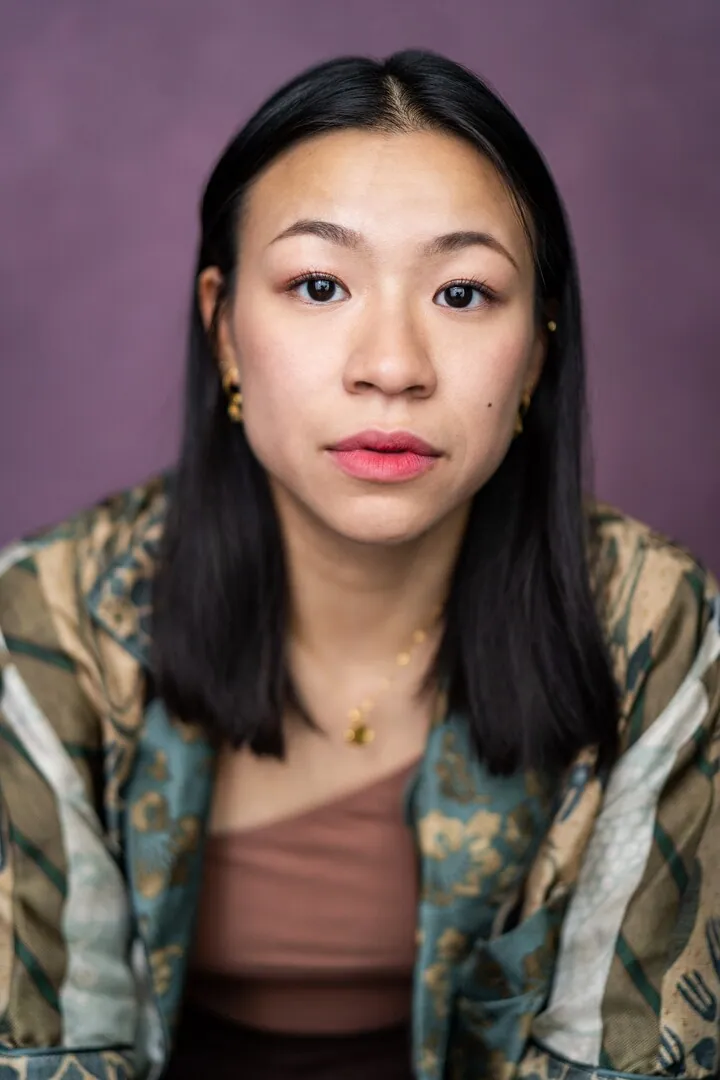
You have gone from growing up in Singapore to performing some of the most iconic roles on the West End. When you look back now, what feels like the turning point that set everything in motion for you?
I think that when I was growing up, I wasn’t the most academically inclined person, and a lot of the time people can be quite critical when you say you want to go into something creative, so it just didn’t feel like a possible path. Things really changed for me when I left home for the first time and moved over to the UK. I really felt like I’d been taken out of my comfort zone.
This is not a feeling that is unfamiliar to a lot of people — many go overseas to study, and it comes with its own set of struggles because you’re away from family for the first time and suddenly have more responsibility for yourself. But I think through those challenges, I landed at the place where I have ended up, and I’ve been very blessed.
Before Les Misérables and Hamilton, what were those early years of training and auditioning like — especially as a Singaporean trying to break into the United Kingdom theatre scene?
It was very difficult auditioning to come to the UK. It’s quite rare for people to talk about how competitive drama schools are and how hard it is to try and get into them, because there are so many people applying for so few spots in a class.
Especially coming from a place like Singapore, which doesn’t tend to have a lot of alma mater in many countries, it’s difficult to get advice on the way to break into the UK theatre scene. When I first auditioned for the UK, I applied to five different drama schools in the straight acting course and got rejected from every single one of them. I had booked a month-long trip and received all of my rejections in the first week, which was so embarrassing.
I went back to Singapore very dejected. I felt like my faith had been squashed. I clung on to hope and ended up going to drama school in Singapore for one year, and I think that really gave me a strong foundation when I reapplied to the UK. I had not planned to reapply — it was my best friend who convinced me to try again — but because I was so scared of getting rejected, I left it so late that by the time I applied, I had missed all of the application deadlines apart from one school that was auditioning in Singapore, and that was Mountview, which was the school I went to.
View this post on Instagram
You have performed Les Misérables before, but this arena spectacular is a very different scale of production. What was your first reaction when you were asked to be part of this version?
When I was asked to do the Les Mis Arena Spectacular, I felt so taken aback and blessed. This industry is so competitive that any time someone asks you if you are available or if they want you, I think that is a compliment to you and your accomplishments, your talent, and your work ethic.
I felt incredibly blessed to be part of Les Mis once again. Taking on this production is a different beast. I have always prided my Éponine on being quite acting-forward, and as this is a concert version, the biggest challenge was compressing the stage acting I do and reworking it so that it works well for the screens. The sound department and orchestra on this are also incredible. It feels special to be part of something this massive.
How has your understanding of Éponine evolved since the first time you played her?
When I first got the role of Éponine, I didn’t have a lot of experience seeing other people’s portrayals of her, so I was a pretty blank slate when it came to my interpretation. All I had were the books that Victor Hugo had written. Part of my research did include viewing other people’s interpretations, but I feel like because I hadn’t grown up with those influences, my interpretation wasn’t as heavily shaped by them.
My understanding of Éponine has changed in that when I first started, she was very young and emotional. Now I have dug into those depths of understanding in her interactions — finding the intricacies in her love towards Marius and the fear she has for her father. I feel like I’ve fleshed out a lot of those details. When I first played her, I think the youth I had was so special. I don’t think that I’ve lost anything, but my interpretation now has so much more nuance.
This production is staged on a massive arena scale, with cinematic visuals and a full orchestra. How does performing Éponine in this context differ from a traditional theatre setting?
One of the big adjustments I had to make for this production, compared to a traditional setting, was the use of in-ear monitors. This was the first time I had used them. They’re used because when we tour to different arenas that vary in size, the sound you get back from the auditorium changes based on the architecture.
Working with them was quite a battle initially, but now I love them. You can really hear the music and the orchestra, as well as hear yourself. They really aid me in ‘On My Own’, because Éponine goes into this wonderful magical world in her head. It feels like I’ve managed to block out the entire world — like I could be in Paris, strutting around in the streets in the rain.
Another big challenge was the use of screens. In some of the songs there’s a close-up on your face, and it really becomes about being as honest in the storytelling as possible and trying to act through your eyes without doing too much. On stage you’re encouraged to be a little bit larger than life to read to the audience, but in this you can be still and live that moment as your character while singing.
Has your physical or vocal preparation changed for this version of Les Misérables?
For this production my physical warm-ups tend to be more vocally inclined, with some stretching and making sure the shoulder area is relaxed and that I can activate the right muscles to sing properly. In terms of vocal preparation, it’s quite similar to what I used to do. I’ve always been a big fan of a phonation straw — it’s a simple device, it’s a straw — and I love it.
With such an international cast of West End and Broadway performers, what has the rehearsal room energy been like?
Being in this international cast of West End and Broadway performers, I feel like I have met some incredibly talented people. Being around people like that, I am constantly inspired and learning from them. I have also made some close friends on this tour, who I will treasure for life.
Are there any moments in this arena production that genuinely give you chills when you are on stage?
Some moments genuinely give me chills — seeing the whole Valjean soliloquy is an inspiration in and of itself. Another moment that gives me chills is when I die in the show. I die onstage and get a really long period of staring out into the audience.
Because I’m trying to act dead, I soften my eyes, so I can’t see individual expressions. But sometimes I’ll see a hand move or hear people sniffling, and it’s such a compliment to hear how much my performance has affected someone. I feel incredibly blessed.
View this post on Instagram
Singapore audiences have largely followed your journey from afar. Does performing at home bring a different kind of pressure, or perhaps comfort?
Performing at home gives me both — a bit of pressure and a bit of comfort. I’m so excited and ready for some of my friends who have never gotten to see me perform since I started working professionally in the UK. This gives them a chance to see me do the role that I think has changed my life.
I’m incredibly excited but also a little bit nervous because I just want to do my best. I’m singing this role which has been taken on by some of the most incredible people in the past — people I look up to, like Lea Salonga and Eva Noblezada. It never gets easier knowing I’m standing on the shoulders of giants and having to match that. I’m very excited to show Singaporean audiences how my version of Éponine has changed over time.
Finally, beyond Les Misérables, are there any roles or types of stories you are particularly keen to explore next?
Honestly, outside of Les Mis I would probably say Elphaba or Glinda in Wicked. I’m very undecided between the two of them. Especially with the movie coming out, I’m itching to do it — and I want to sing the big song.


